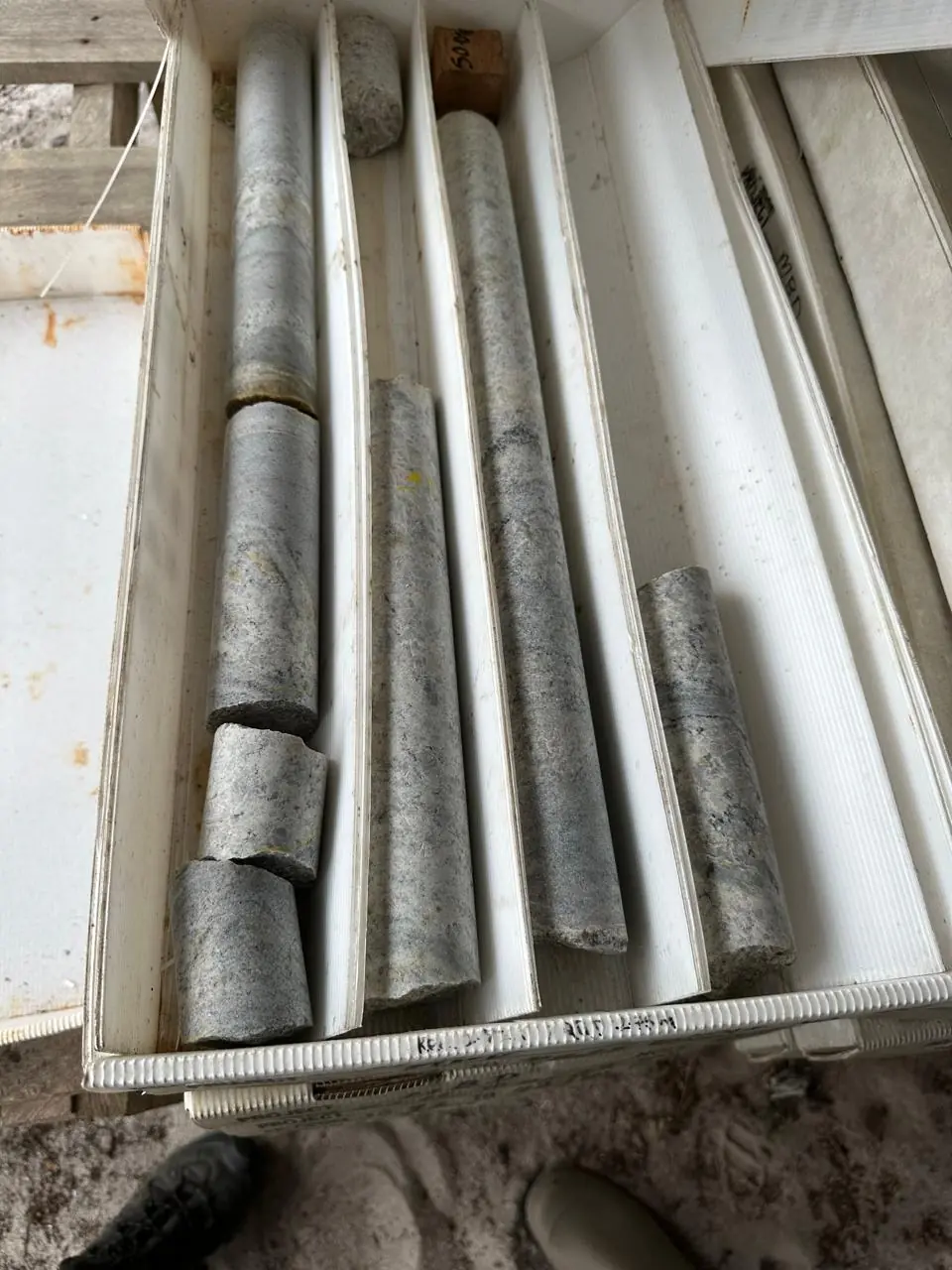
The Proof.
Before a quarry is a quarry, it's a hypothesis. Fifty diamond-drill holes. Boxes labelled MBD01 through MBD50, logged by hand. Gabbro, gneiss, granite — the three rock types that would decide whether this patch of rainforest could produce commercial aggregate. The cores said yes.
How we got our name
A creek threads through the land beneath our feet. It's named in the technical report. It's traced on the maps the surveyors drew. It was there long before us, and it will be there long after.
The creek is called Seba.
We didn't invent our name. We borrowed it from the water.
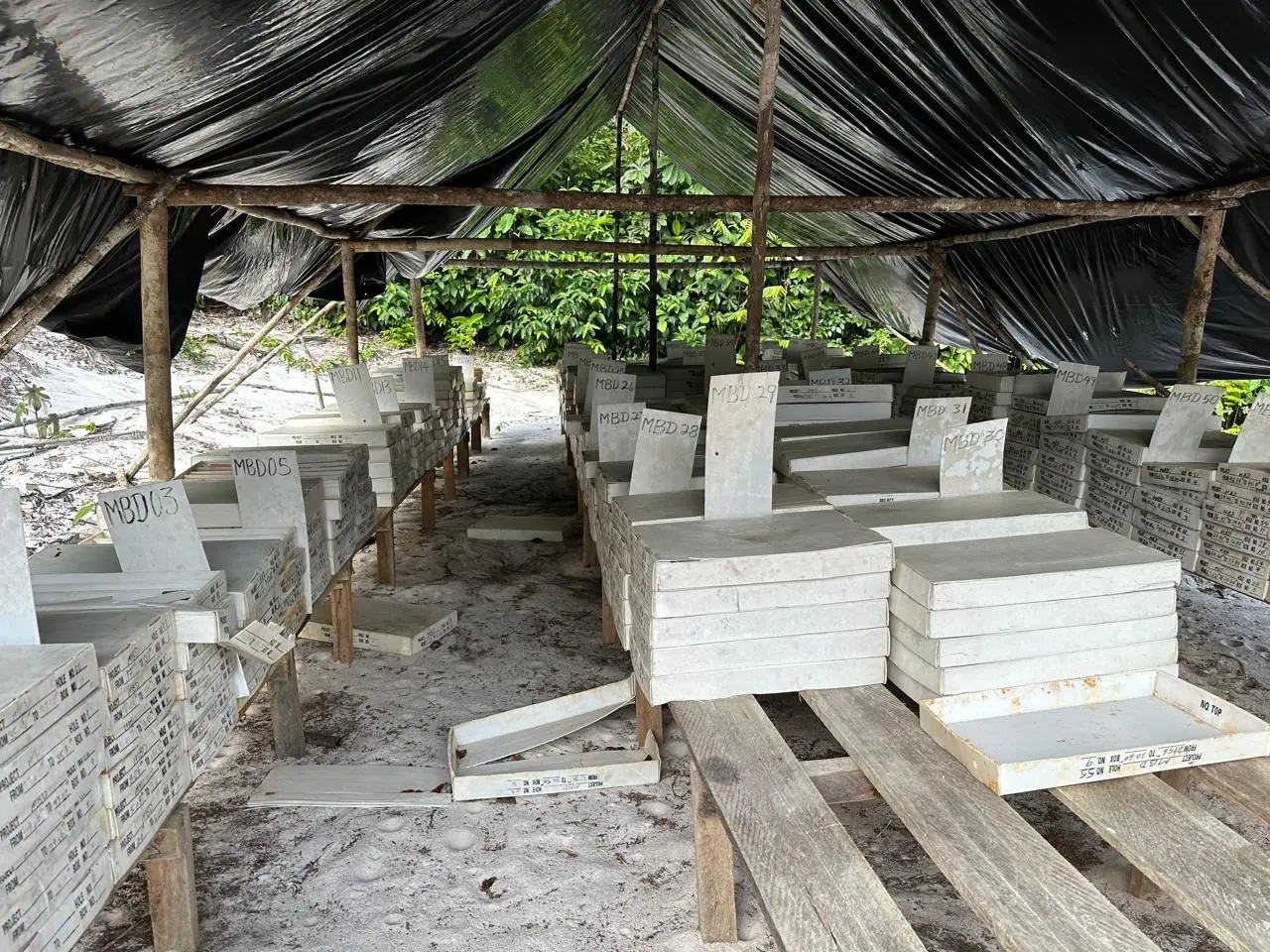
The Numbers.
Those 40 cores weren't just inspected — they were logged and modelled in Leapfrog 3D. The verdict: 389 million tonnes of Measured and Indicated aggregate across gabbro, granite, diorite, and gneiss. Inferred resources beyond those — known to exist, not yet quantified. There's no need to.
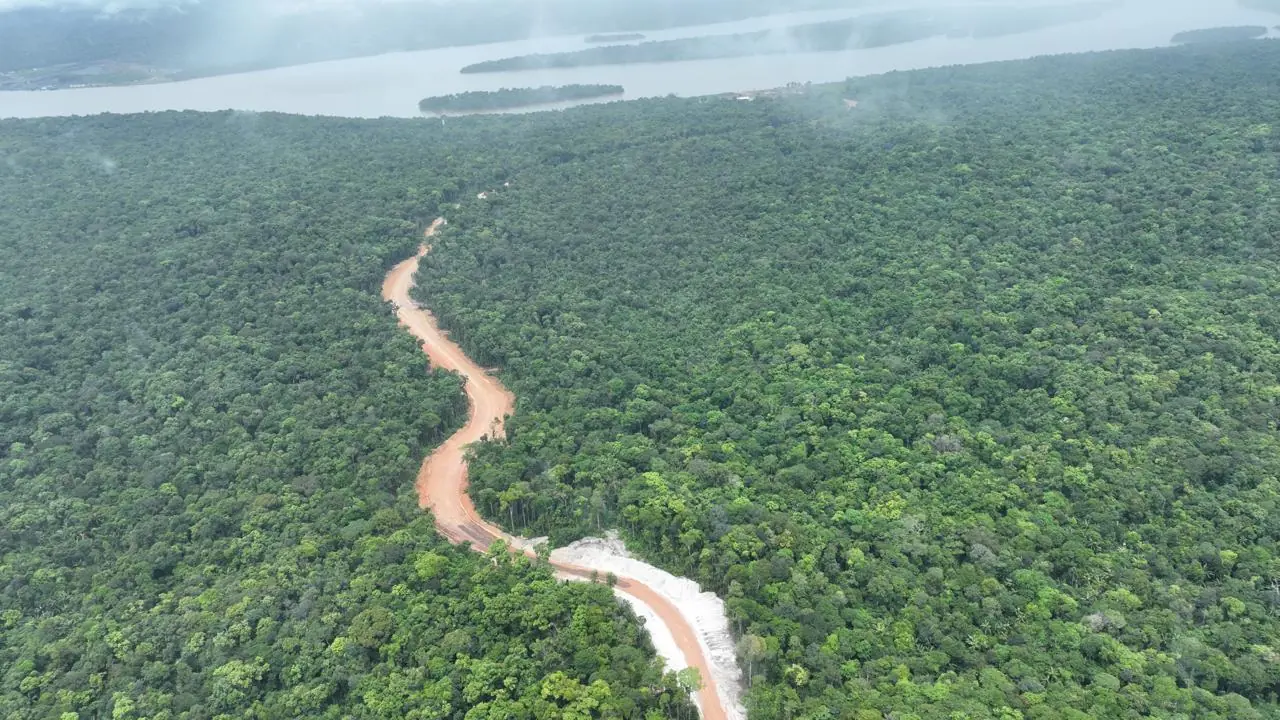
The Path In.
There was no road. To get a drill rig in, and one day to get aggregate out, we had to build one — kilometres of track through undisturbed rainforest, under GGMC oversight, connecting the quarry to the Essequibo you see in the distance.
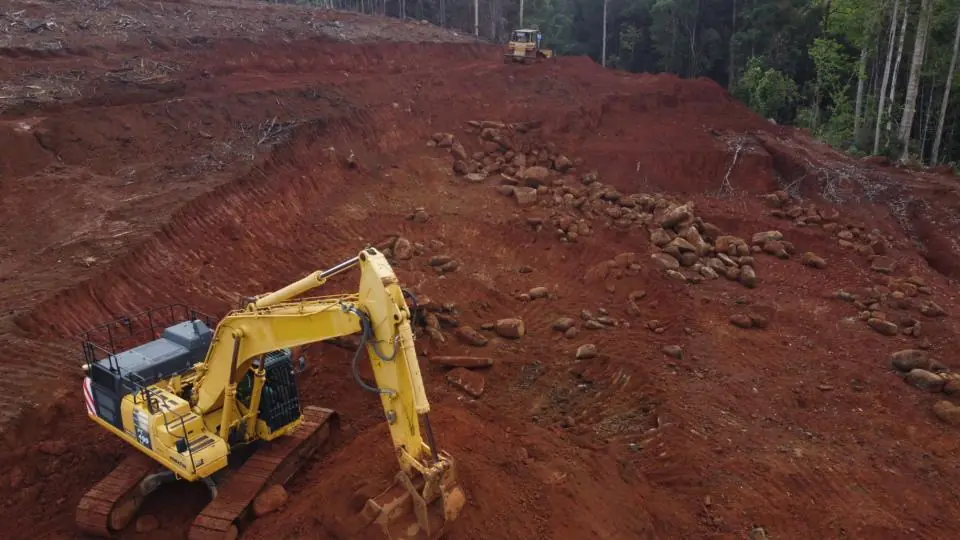
Breaking Ground.
The top three metres are laterite — red, soft, useless for our purpose. We stripped it back until the first boulders surfaced. Each one a confirmation: the drill cores weren't lying.
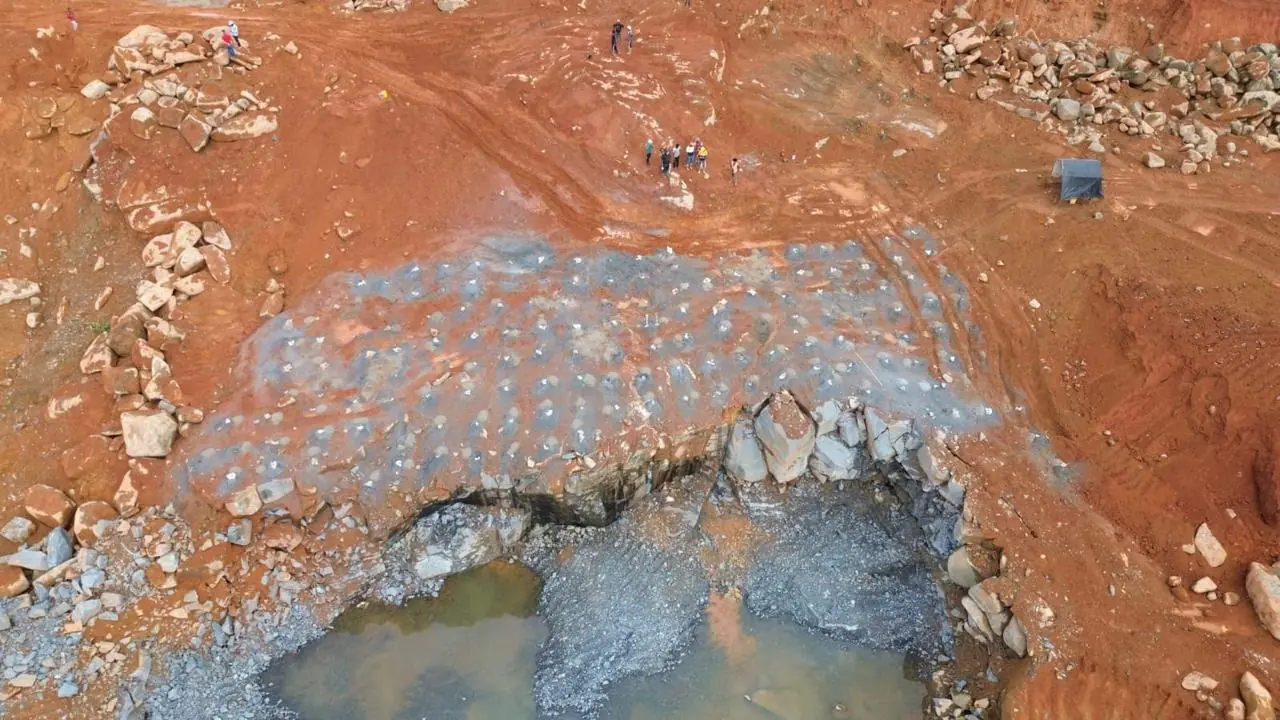
The First Blast.
A blast pattern is a grid of holes drilled in a precise geometry, charged, and fired in milliseconds. The face that came down that day was the first commercial rock SEBA Quarry had ever produced.
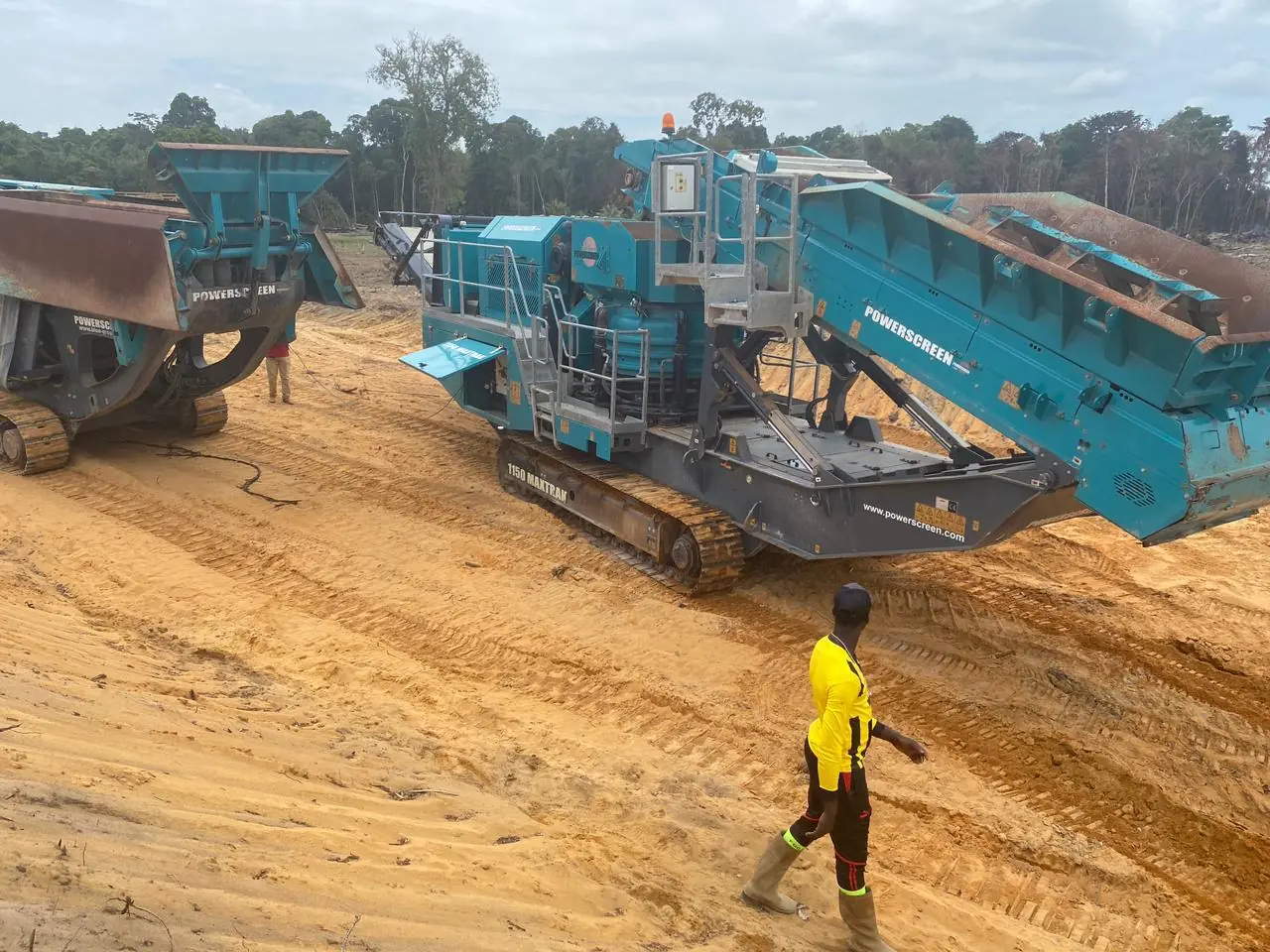
The Plant Arrives.
Two Powerscreen machines — a jaw and a cone — delivered across rivers and the road we'd just built. Commissioning took a week. The first tonne of sized aggregate came off the belt that month.
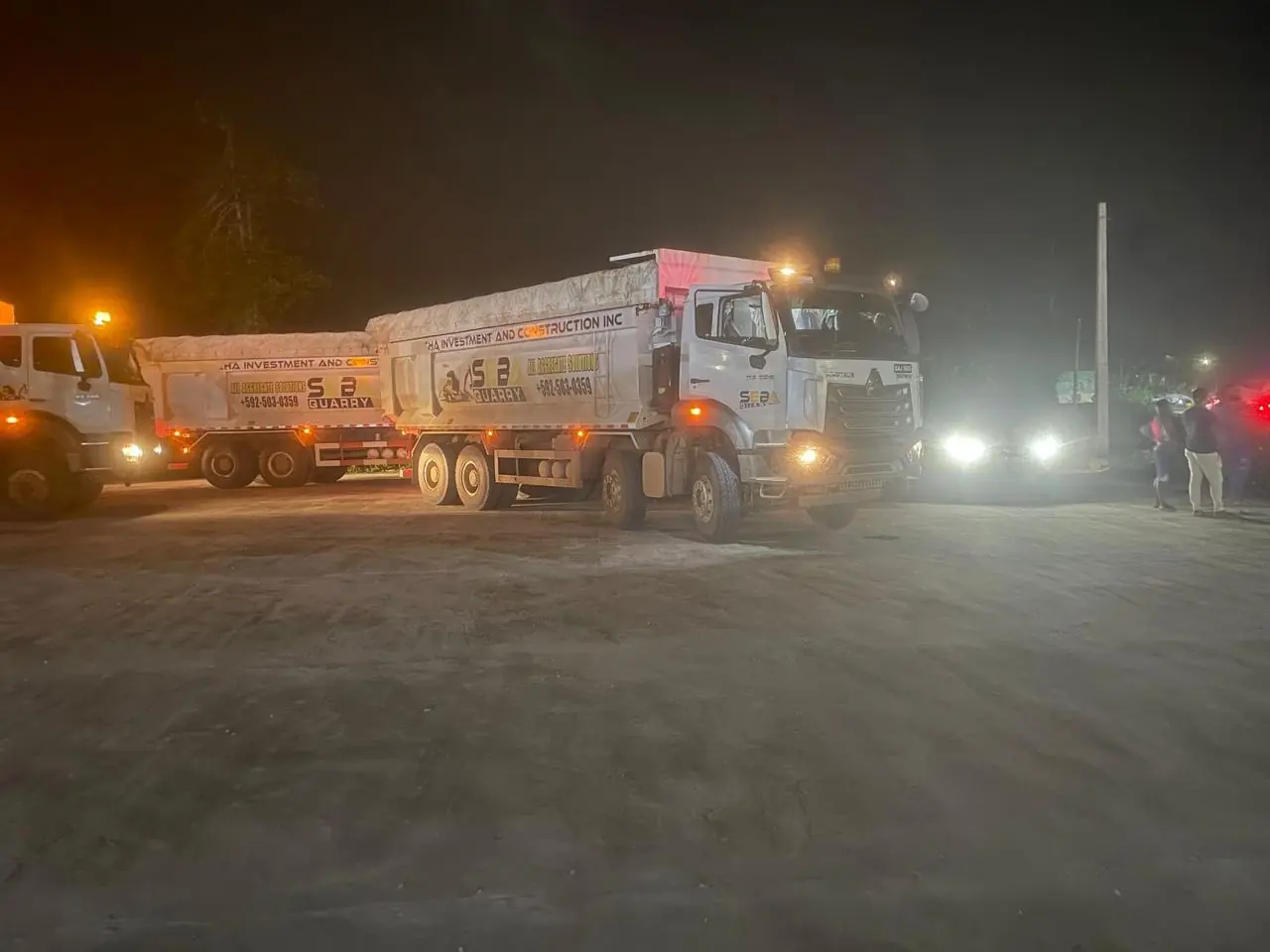
The Fleet Rolls.
The livery reads SEBA QUARRY. The small print reads Elicha Investment and Construction Inc. Our trucks now deliver to Linden, East Bank, Georgetown, and the East Coast — every day, from a site that five months ago was forest.
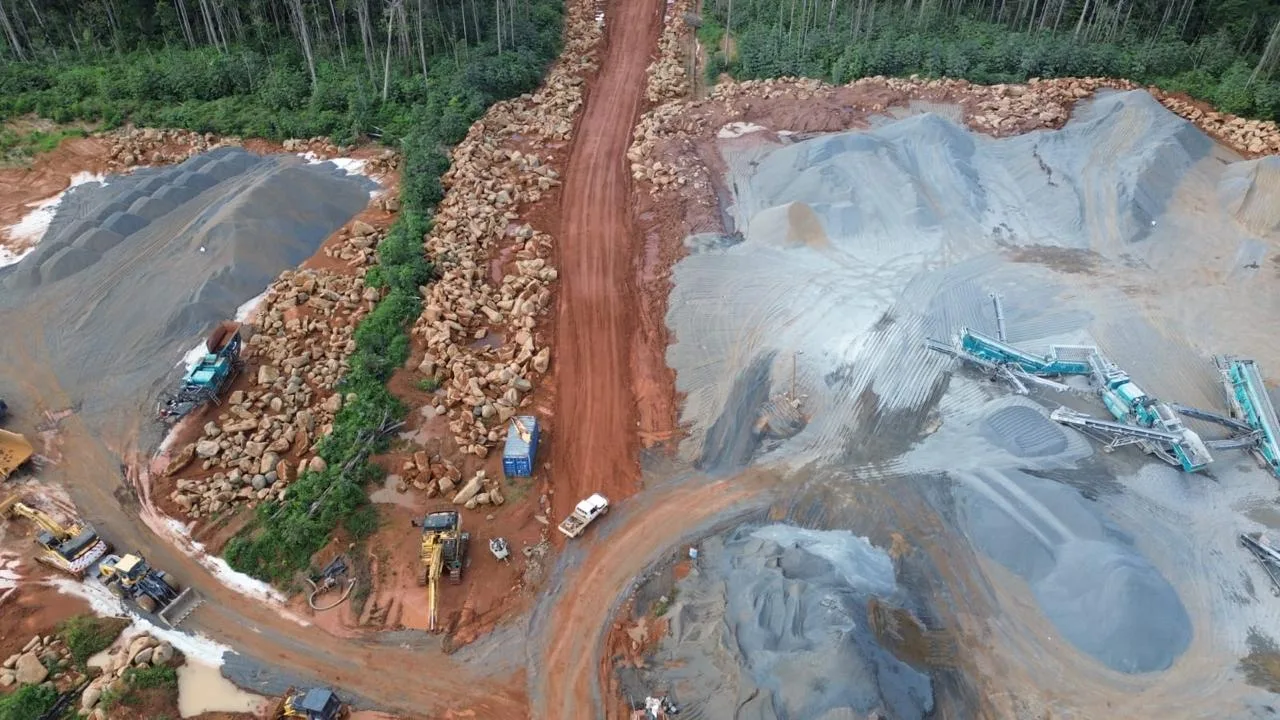
Today.
One blast pattern. One crusher train. One fleet. Five delivery zones across Guyana. Building what this country is going to need next — road by road, slab by slab.
From here, pick a road.
Five grades. Six delivery zones. A commercial team that answers.